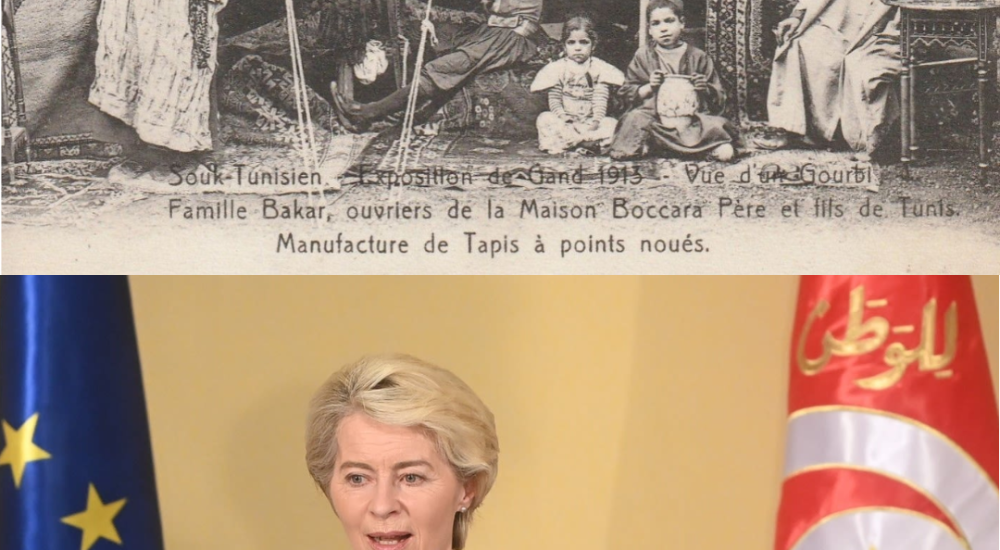
A Reflection on Dignity
volunteer takeover
Kaaitheater works with a group of volunteers with varied interests and experiences. Their tasks take many shapes and forms, from promotion and distribution around the city to providing support during evening events and acting as social media ambassadors. Sometimes it takes the shape of writing a personal review after seeing a show, read below the thoughts and reflections of Lobna Morsi on Dignity by Chokri Ben Chikha.
If you’re interested in becoming a volunteer you can find more info here or contact audience@kaaitheater.be
Dignity: A word that has been chanted many times in streets that speak my mother tongue. Who
can claim it? Who, and what, grants it?
At the House of Compassion, where four Palestinians are on hunger strike, I did not expect to
become part of Chokri Ben Chikha’s Dignity Commission. I expected to be a mere spectator, as
one often is when watching the atrocities of our world on the news. Dignity made me question,
for a moment, which parts were real and which were theatre, until I realised that it didn’t matter
anymore.
Observing people with different titles debating a topic such as dignity felt like everything and
nothing all at once. It was a confrontational piece, to say the least. Being able to sit down and
debate human rights is a privilege that can only be afforded by some, while others are trying to
find the space to simply be treated as human beings. It’s a portrayal of the many layers of our
society, the legal and political structures that govern us, and the individuals who work within
them. The performance reflected the nuances behind how an ideology is formed. But why do we
need so many opinions on how to give dignity? Is dignity claimed or given?
The confrontation in this piece went beyond the portrayal of the hypocrisy of democrats who
parade themselves as the leaders of the “civilised” part of the world. It is the hypocrisy of
everyone, everywhere. The damage caused by colonial greed and dehumanisation has not fully
left the room. It is more subtle, and I would argue even more dangerous, given that we can no
longer say that maybe things would be better if humans were more aware.
The French colonisation of Tunisia officially ended in 1956, and the Tunisian authoritarian police
state began to take shape in 1957. A similar pattern can be found in other previously colonised
nations. From one form of oppression to another. Dignity reminded me that this is not a
coincidence. Yet many in a generation increasingly detached from the devastation of colonialism
appear to believe that there is a conspiracy designed to make them feel guilty and responsible
for crimes they did not commit. But I propose that we remember that we do not live in this world
alone. History is shared. Consequences are shared. Humanity is shared. And dignity
must be shared.
As the show ended, I returned to this: when a passport, a document, becomes an indicator of
how much dignity one deserves, so many questions arise about the current geopolitical climate.
Who does international diplomacy serve at the end of the day? At the House of Compassion,
Palestinians are on hunger strike because their families in Gaza are being denied their right to
family reunification in Belgium. They do not get to be rescued from a genocide. Meanwhile,
those who are committing this genocide use their visa-free entry into Europe to visit friends and
family and go on holiday before safely returning.
I am left with a craving for a moment that I would like to picture as one big collective breath; a
breath between being colonised from the outside and being colonised from within. Just a
moment for those who have been and continue to be colonised to breathe with their chests wide
open