Part of TASHATTOT Festival
Full program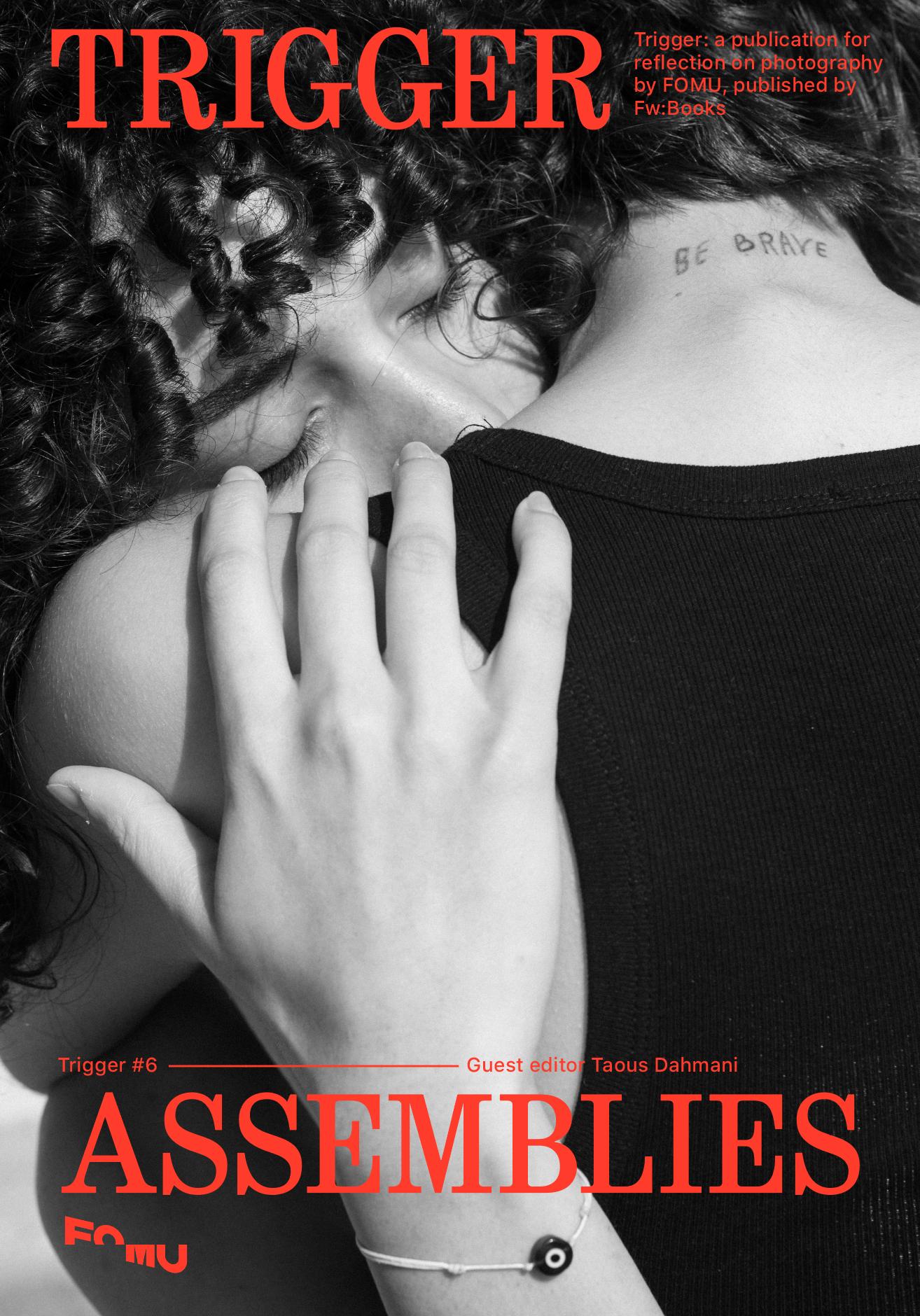
Tom Viaene Joachim Ben Yakoub Tashattot Collective Joseph Kai
Paper Assemblies
This conversation departs from Trigger #6: Assemblies but moves beyond the book as object, approaching publishing as a form of gathering. Through the lens of “paper assemblies,” it explores how printed matter such as magazines, posters, and postcards can carry traces, circulate stories, and continue to bring people together across time and place.
Drawing on his research into Ahl El Hijra, a Moroccan collective active in 1980s Schaerbeek, Joachim Ben Yakoub reflects on how such paper traces transmit collective memory not as fixed history, but as something continuously revisited and reworked. These materials remain active through moments of reactivation, where past and present meet in conversation and shared experience.
In parallel, Tashattot Collective engages from their work on dispersion and collective care across SWANA and Europe, creating spaces where fragmented communities reconnect and new forms of assembly emerge.
The panel considers how publishing connects dispersed geographies, and how traces, memories, and stories continue to circulate, gather, and shift meaning over time.
With:
• Tom Viaene (moderator) - editor of the Trigger book series at FOMU – Museum of Photography Antwerp.
• Joachim Ben Yakoub - art worker engaged in writing, curating, and dramaturgy, active in collective research and teaching in Brussels (L'École de recherche graphique) and Antwerp (Sint Lucas Antwerpen).
• Tashattot Collective - Brussels-based socio-cultural collective connecting artists and cultural practitioners from the SWANA region across Europe.
Trigger #6: Assemblies (2025)
Guest edited by Taous Dahmani, and designed by Fw:Books, the book starts from a simple but urgent premise: “life is politics, and politics is life.” From there, it explores how collectivity takes shape under conditions of fragmentation, diaspora, and precarious existence.
Rather than focusing on the spectacular or the event-driven, Assemblies turns toward what holds things together underneath: the infrastructures of coming together. From cafés and reading groups to living rooms, dance studios, football stadiums, and bookshops, “assemblies” here are understood as everyday, often invisible forms of collective agency.